Filter by topic and date
Previewing the updated RFC-Editor.org website at IETF 124 Montreal
- Matthew Holloway Senior Software Development Engineer
- Alexis Rossi RFC Series Consulting Editor
- Robert Sparks Senior Director of Information Technology
16 Oct 2025
The RFC-Editor.org website, the official distribution channel of RFC documents that describe the Internet's technical foundations, is being reimagined to address the needs of RFC consumers. An early preview of the site will be shared at the upcoming IETF 124 Montreal meeting on 1-7 November. The new website is expected to be put into production early next year.
IETF participants in Montreal are encouraged to preview the new site by visiting the RFC Editor desk near the IETF 124 registration desk. This in-person demonstration follows on from a presentation at a recent RPC community call. The new RFC-Editor.org website, and many other topics, will be discussed during the upcoming RFC Production Center open meeting on 22 October 2025.
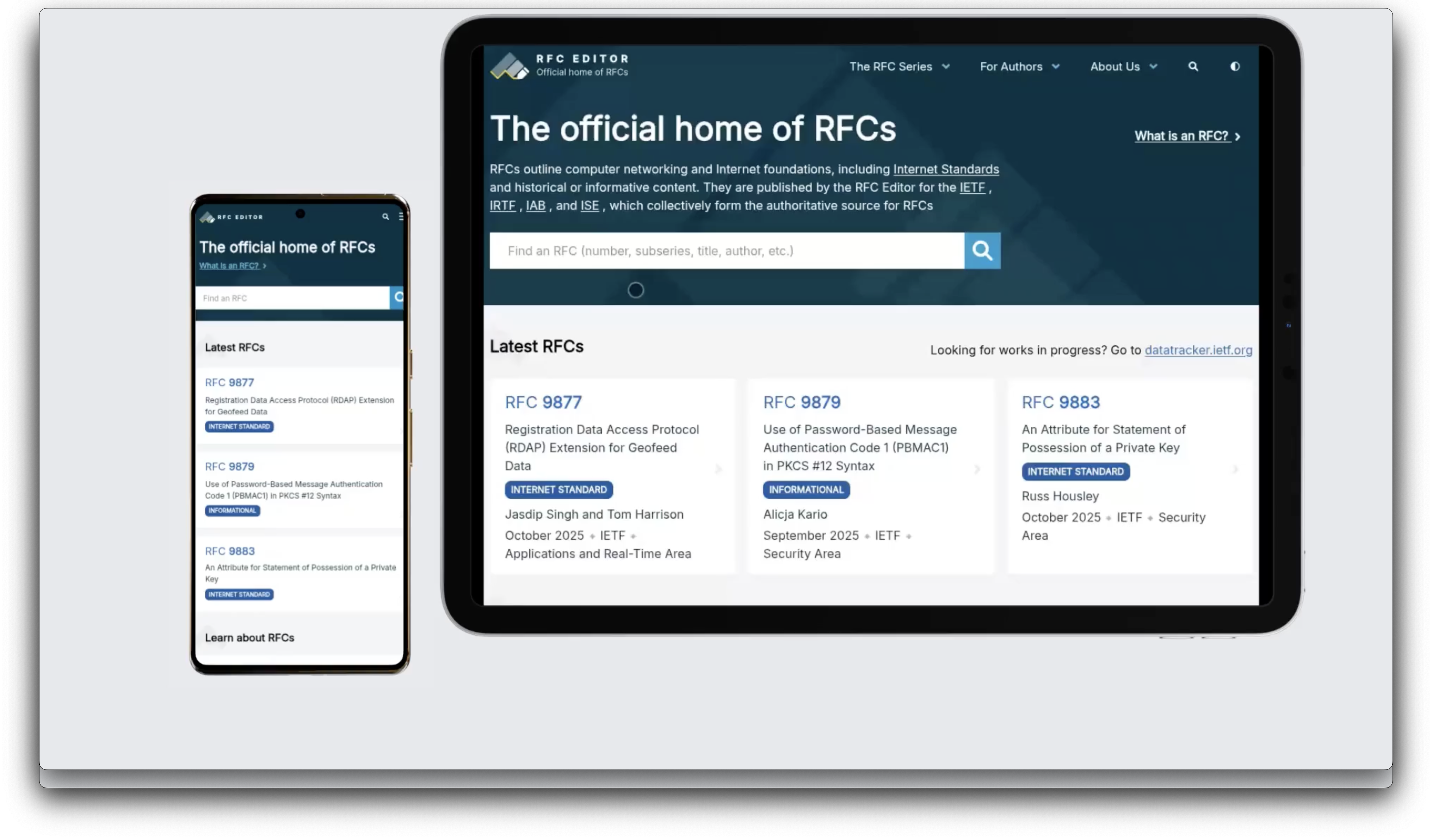
The widespread dissemination, understanding, and use of the open standards published in RFCs is critical to the development of an open Internet. The updated site has been redesigned to make finding and reading RFCs easier and more intuitive for end users, as well as highlighting useful information about RFC conventions and publication processes. Changes to be demonstrated include:
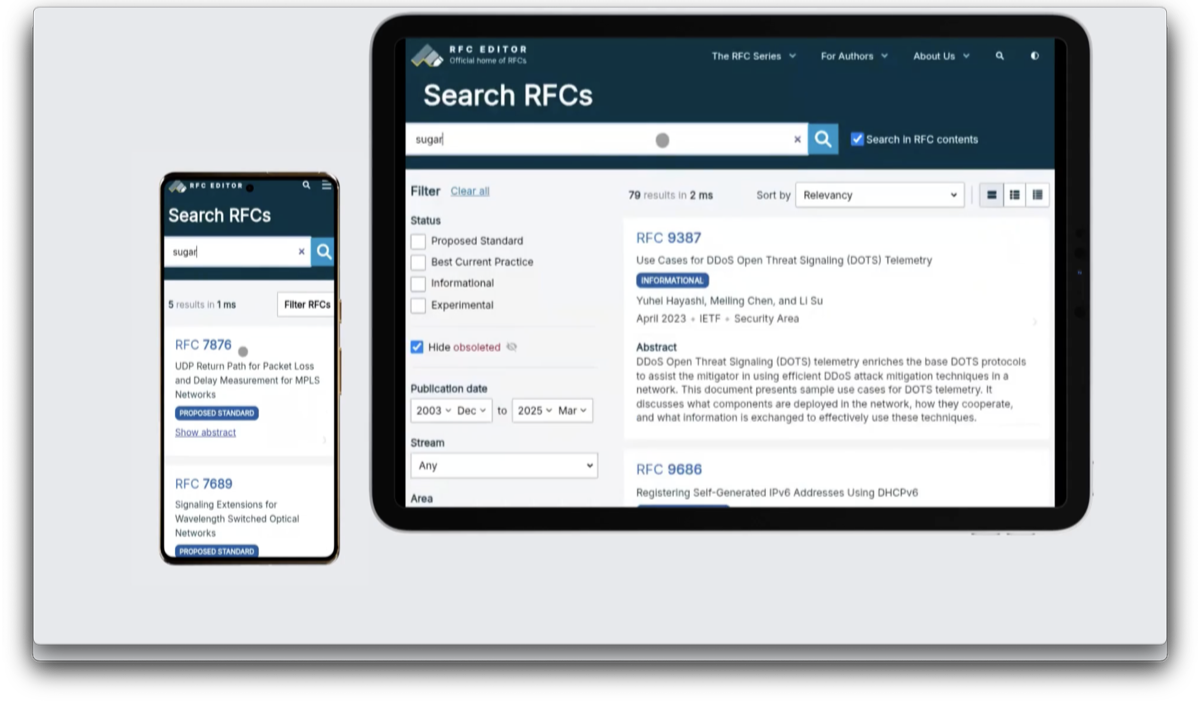
- Advanced RFC search: A new search engine to allow search within RFC content and metadata (status, keywords, stream, area, working group, date range, and more).
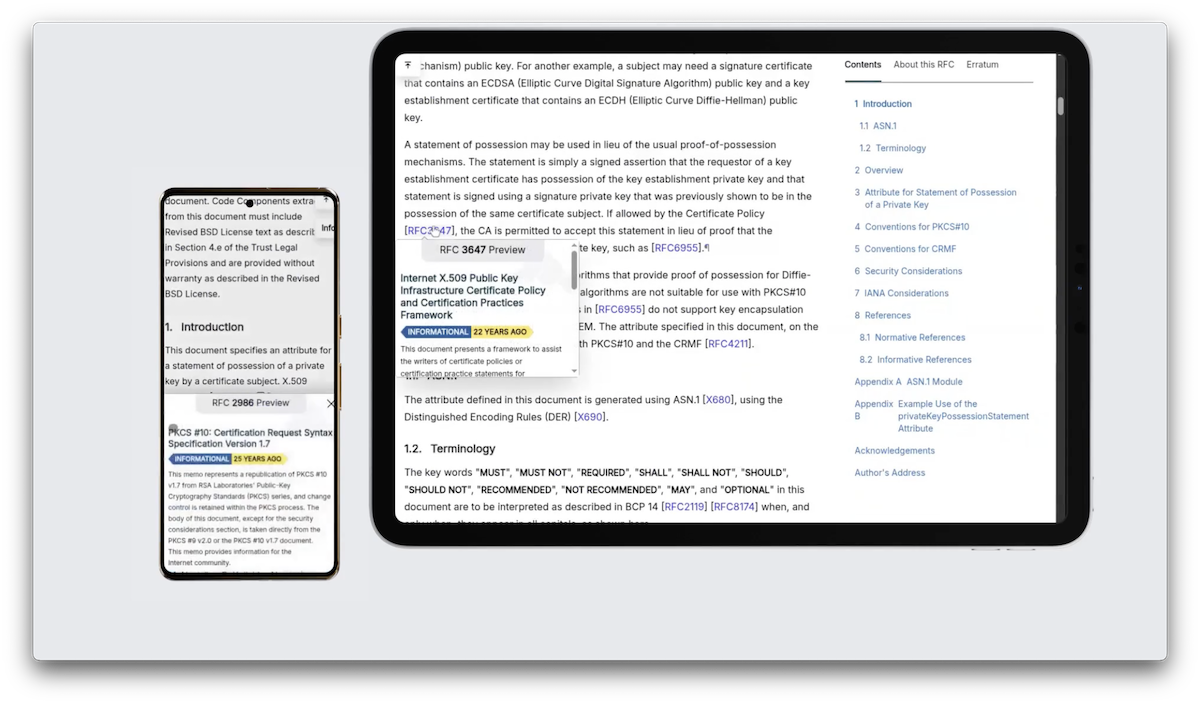
- Modern display features: RFC “info” pages now include RFC content for reading on mobile, tablet, and desktop. Links to other RFCs have a tooltip preview of the content (like Wikipedia) and the site will display pages in light or dark mode.
- Updated API: API responses will be updated in several ways, including to accommodate the move to RFC ids with 4 digits to 5 digits as the 10,000th RFC is published.
This website is being implemented with a contemporary website framework (Nuxt) that leverages the current Web architecture, using the browser as an integral part of the application as appropriate, and using server-side rendering to provide very rapid and scalable responses.
The IETF Tools Team is developing and implementing the updated RFC-Editor.org website in close coordination with the RFC Production Center (RPC) team. Alongside this project, the Tools team is working to modernize the RPC’s workflow management tooling and creating a new Internet-Draft (I-D) authoring and editing tool. Join upcoming Tools Team meetings, which are open to anyone, to learn more about RFC-Editor.org changes and other projects underway.
This phase of development is setting the foundation for further improvements to the website, including faster and more comprehensive searching of RFCs, clearer routes for RFC consumers to participate in the RFC creation process, and easier identification and use of a set of related RFCs.