Filter by topic and date
IETF@40
16 Jan 2026
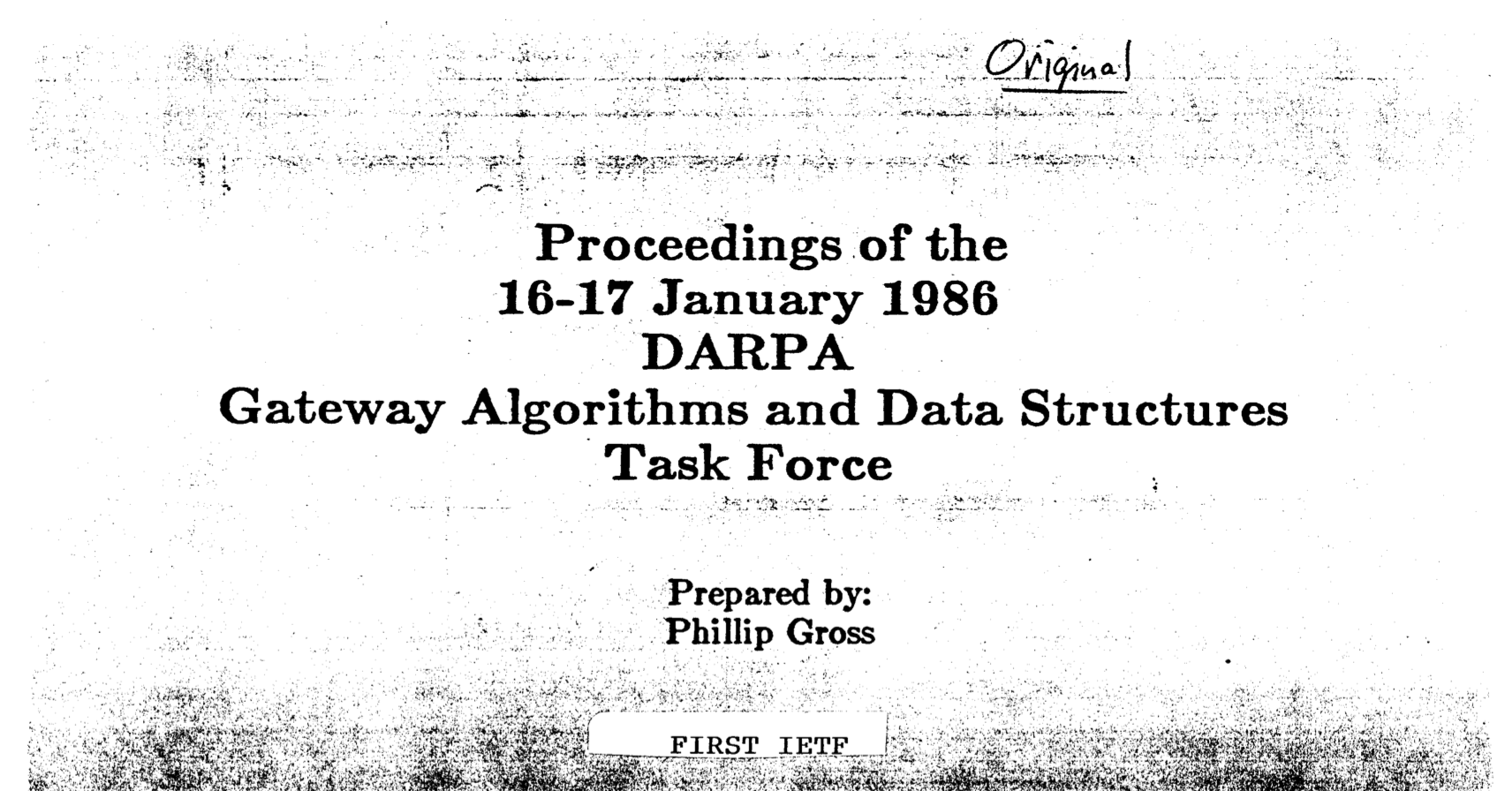
Forty years ago today, 21 people gathered in San Diego, California for the first meeting of what became the Internet Engineering Task Force.

Today, nearly 8000 IETF participants from around the world collaborate in more than 100 working groups via email lists, hundreds of fully online interim meetings, and three plenary meetings each year. Billions of people use technologies developed in the IETF every day.
Since that first meeting, work and discussions have continued online. An additional 123 plenary IETF meetings and thousands of interim meetings have been held over the past 40 years. The next IETF meeting, the IETF 125 Shenzhen meeting is scheduled for 14-20 March 2026, with more than 1000 participants expected onsite and online.
Any interested person can participate in the work and know what is being decided. Anyone can sign up to a working group mailing list or register for an IETF meeting. All IETF documents, Working Group mailing list archives, and meeting materials are publicly available on the Internet.
While the Internet has grown and evolved in ways that were impossible to imagine four decades ago, the IETF remains committed to making the Internet work better. The IETF pursues its mission in adherence to the following cardinal principles:
Open process Any interested person can participate in the work, know what is being decided, and make his or her voice heard on the issue. Part of this principle is our commitment to making our documents, our Working Group mailing lists, our attendance lists, and our meeting minutes publicly available on the Internet.
Technical competence The issues on which the IETF produces its documents are issues where the IETF has the competence needed to speak to them, and that the IETF is willing to listen to technically competent input from any source. Technical competence also means that we expect IETF output to be designed to sound network engineering principles - this is also often referred to as "engineering quality".
Volunteer Core Our participants and our leadership are people who come to the IETF because they want to do work that furthers the IETF's mission of "making the Internet work better."
Rough consensus and running code We make standards based on the combined engineering judgement of our participants and our real-world experience in implementing and deploying our specifications.
Protocol ownership When the IETF takes ownership of a protocol or function, it accepts the responsibility for all aspects of the protocol, even though some aspects may rarely or never be seen on the Internet. Conversely, when the IETF is not responsible for a protocol or function, it does not attempt to exert control over it, even though it may at times touch or affect the Internet.